Co-Existing with Beavers at Para Family Preserve
July 14, 2026
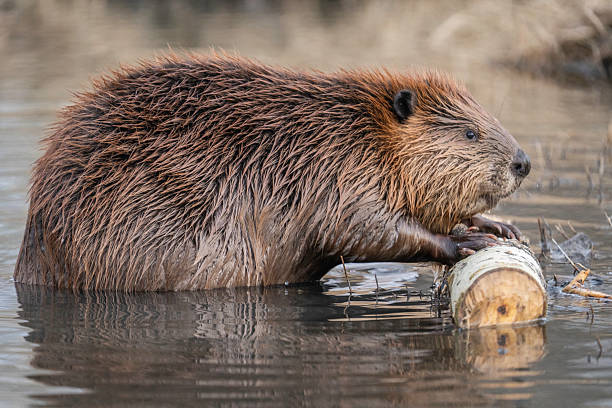
The American Beaver (Castor canadensis) is an ecosystem engineer and a keystone species (a species that has a disproportionately large impact on their environment when you consider its population size).
The vast wetland habitats that beavers create are biodiversity hotspots. They create ponds and wetlands that support a wide variety of plants, fish, birds, turtles, and other wildlife.
These wetlands also act as giant sponges, absorbing rainfall and slowing runoff, which helps prevent downstream flooding. As water filters through the wetland, pollutants are removed and water quality improves.
Beavers are remarkable animals, but when they settle near human development, conflict can arise. The same wetlands that boost biodiversity sometimes flood roads, culverts, and nearby properties.
At Opacum, we’ve had our fair share of beaver-related conflict to manage lately! This week, we are celebrating the successful completion of one of these management projects.
At the Robert F. and Jeanne R. Para Family Preserve in Southbridge, beavers have contributed to a stunning and vibrant ecosystem known as Lebanon Brook Pond. This pond, which covers approximately 30 acres, is home to diverse wildlife including heron, bald eagles, ducks, fish, and turtles.
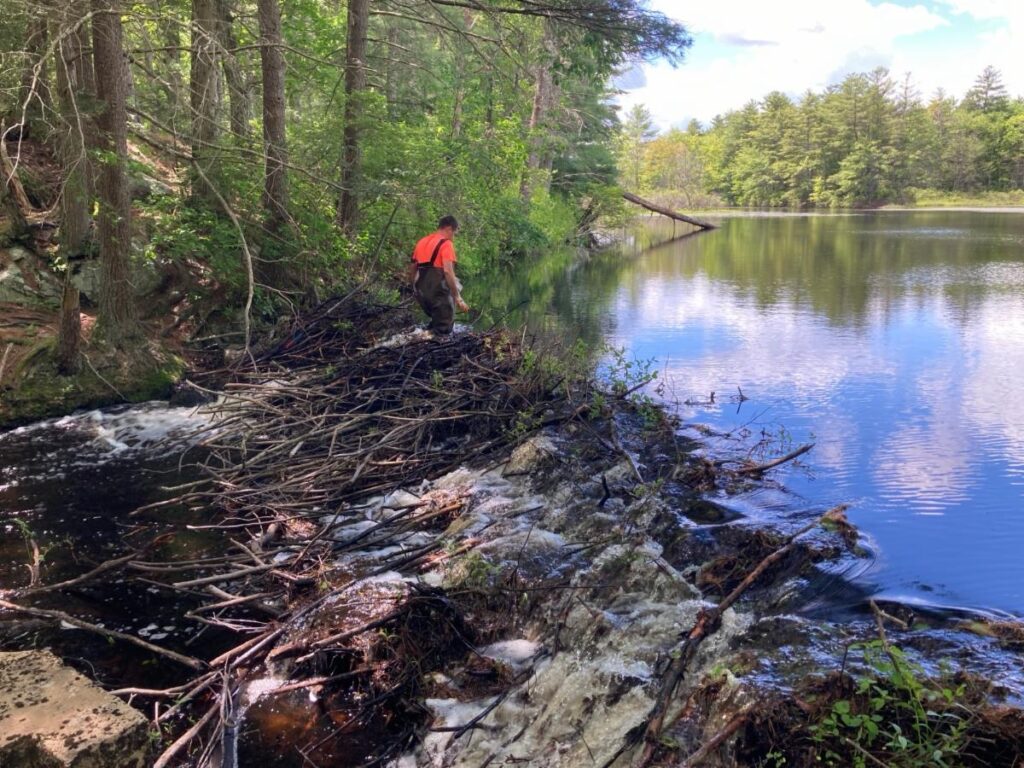
In recent months, the beavers at the Para Family Preserve have been very busy. Their dam increased the water level at Lebanon Brook Pond to overflowing, flooding the main trail that accesses the conservation land.
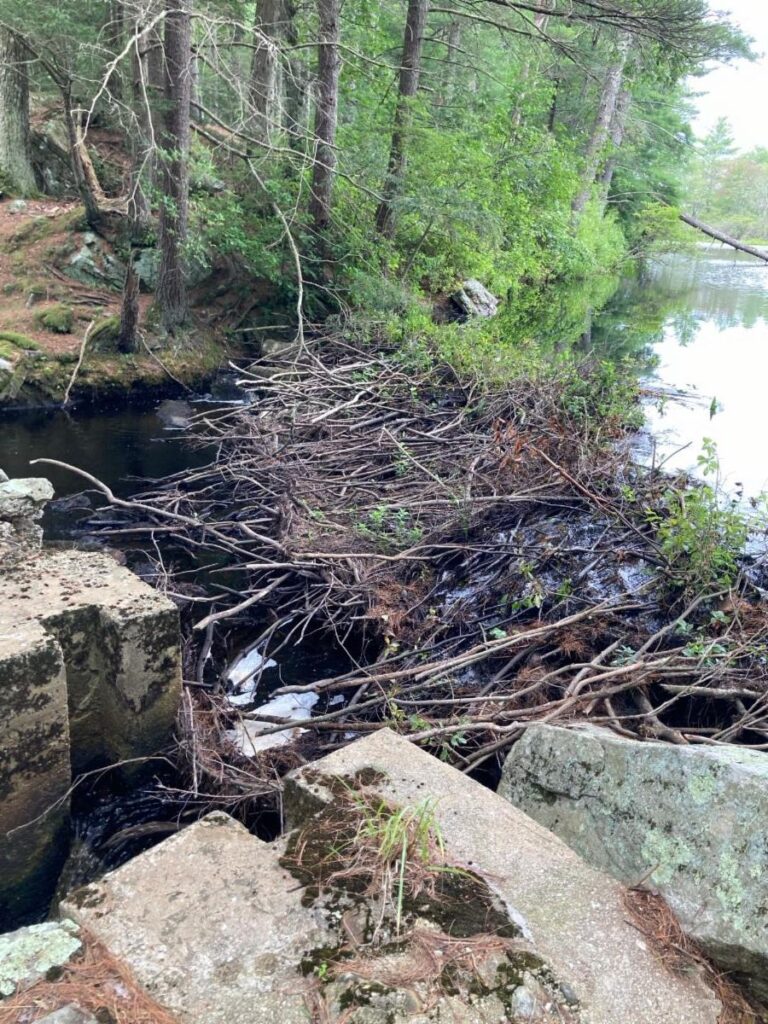
is causing the flooding
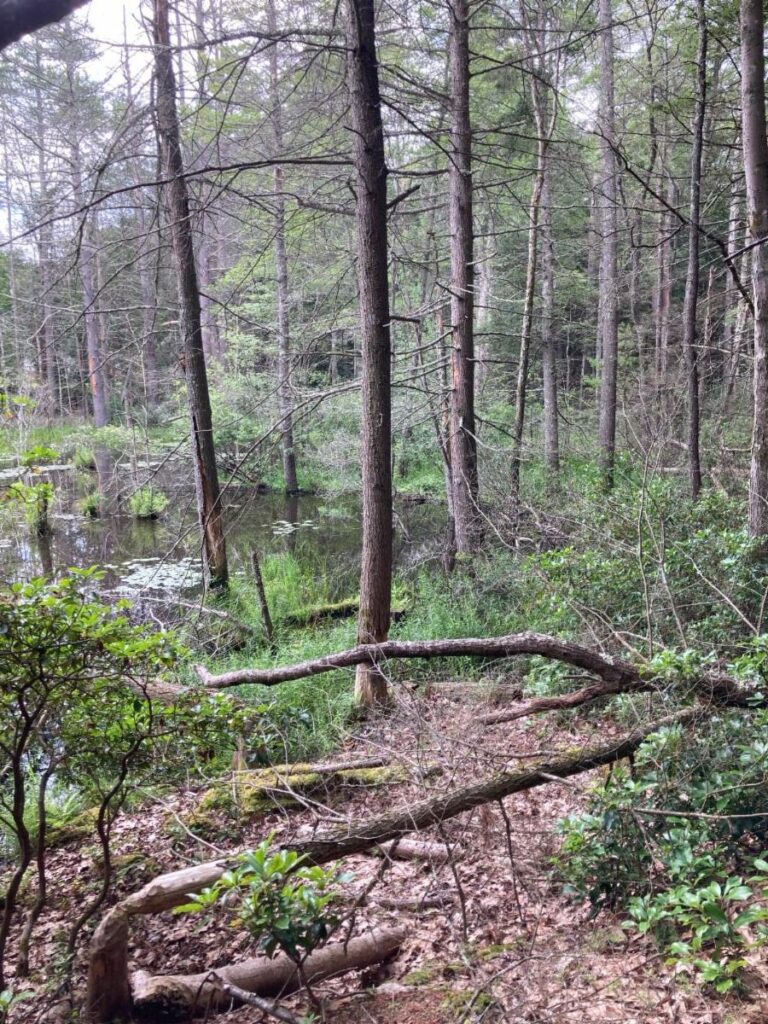
the adjacent forest
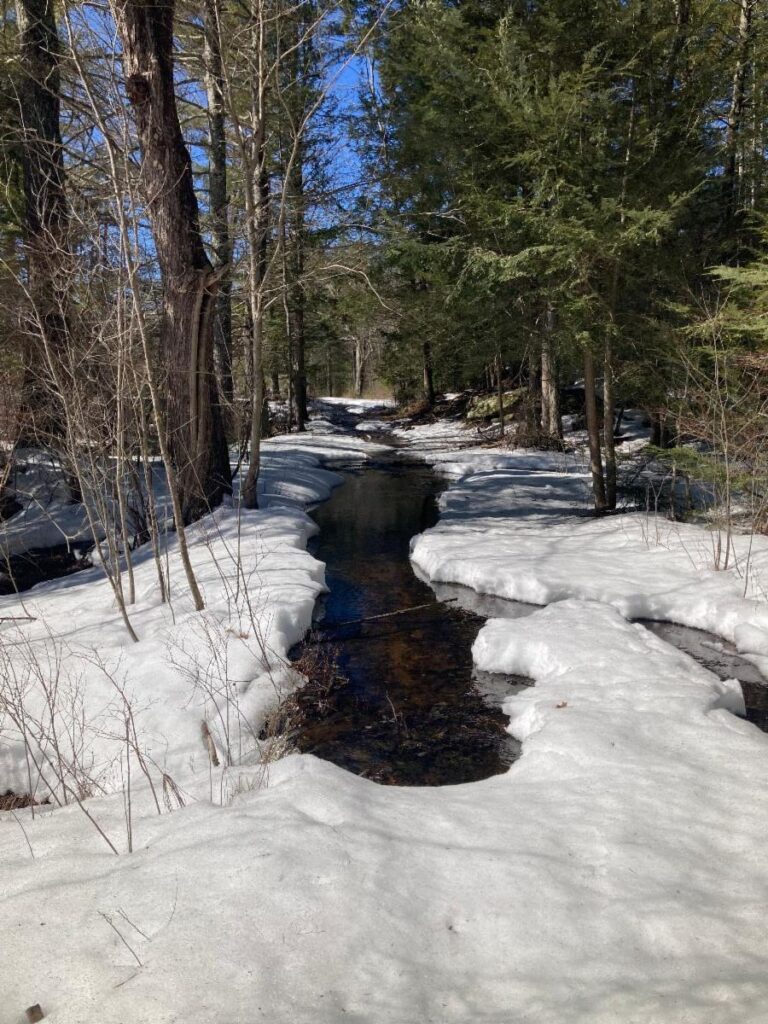
Opacum Land Trust is committed to protecting all wildlife on our properties, and beavers are no exception. For help with this problem, Opacum contacted Beaver Solutions LLC. They are experts in resolving human-beaver conflict and are known for developing creative solutions that allow beavers to remain in place.
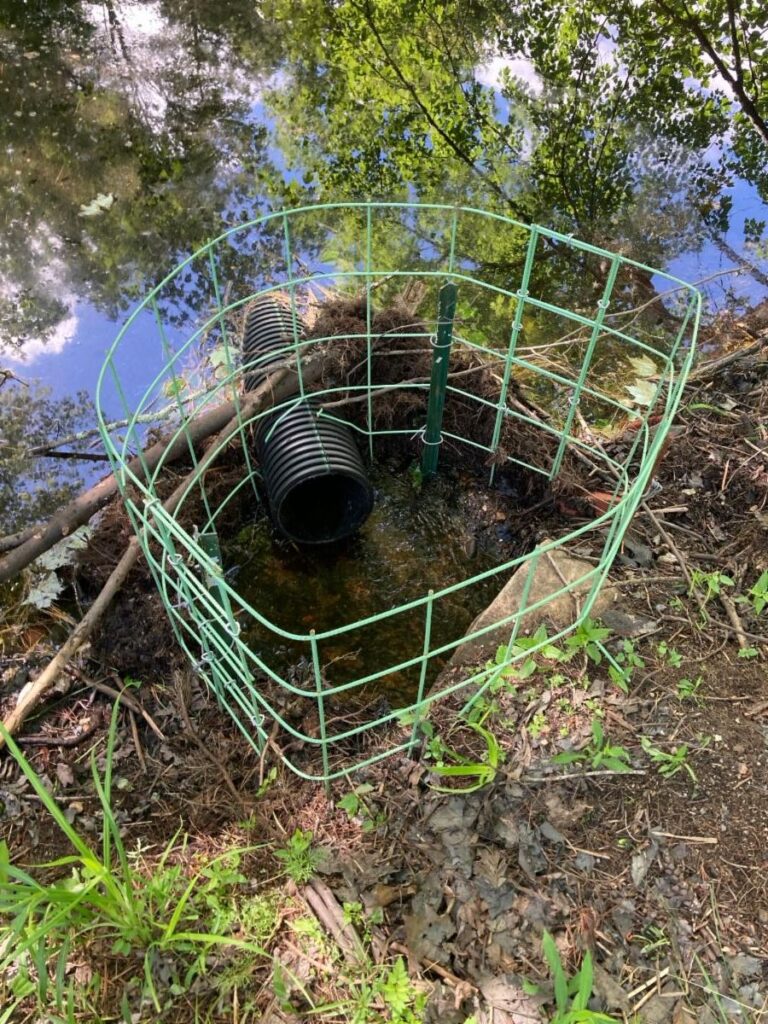
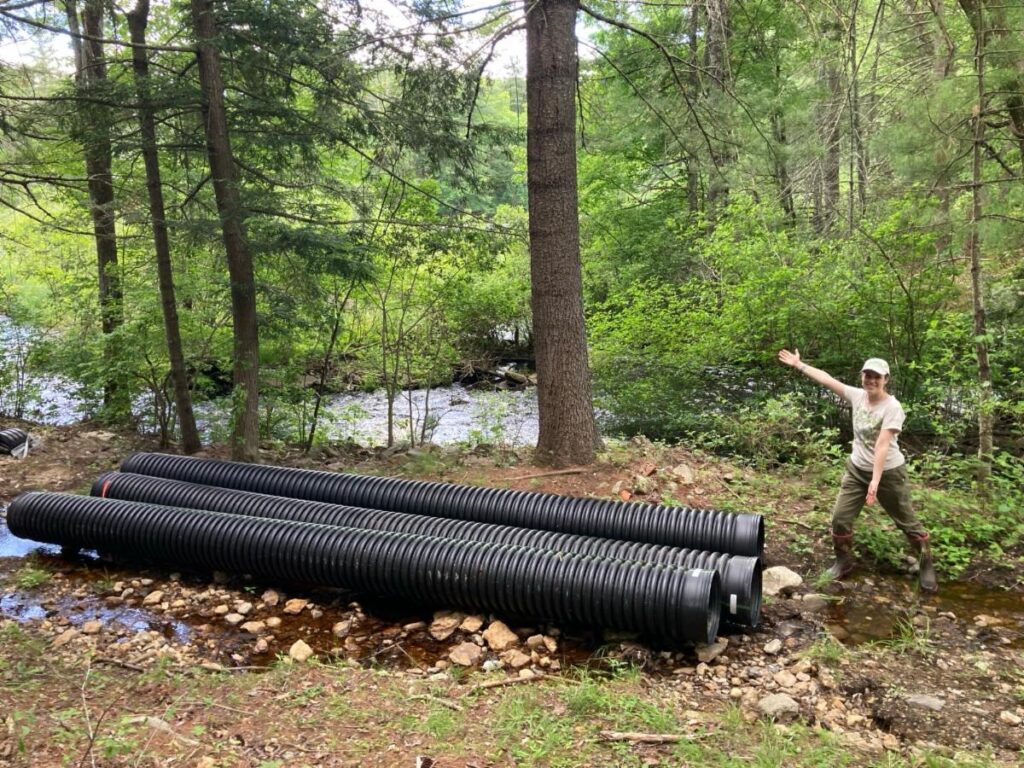
Last week, Beaver Solutions installed a “beaver deceiver” at Lebanon Brook Pond. A beaver deceiver is a fence and pipe system that carries water from the pond and releases it downstream, holding the pond at a controlled level. The system moves water without creating a detectable flow, which is important because flowing water stimulates damming behavior in beavers. This design allows beavers to remain and preserves the environmental benefits of the beaver pond while controlling water levels to prevent flooding.
By Friday, the water level was lowered by about 6 inches, and flooding had receded from the main access trail. The beavers are happy and so are we.
This project was completed with funding from The Massachusetts Society for the Prevention of Cruelty to Animals (MSPCA-Angell), the Hyde/Dexter Russell Charitable Foundation, and the Trustees of the Claire Birtz Estate. We are grateful for their support!
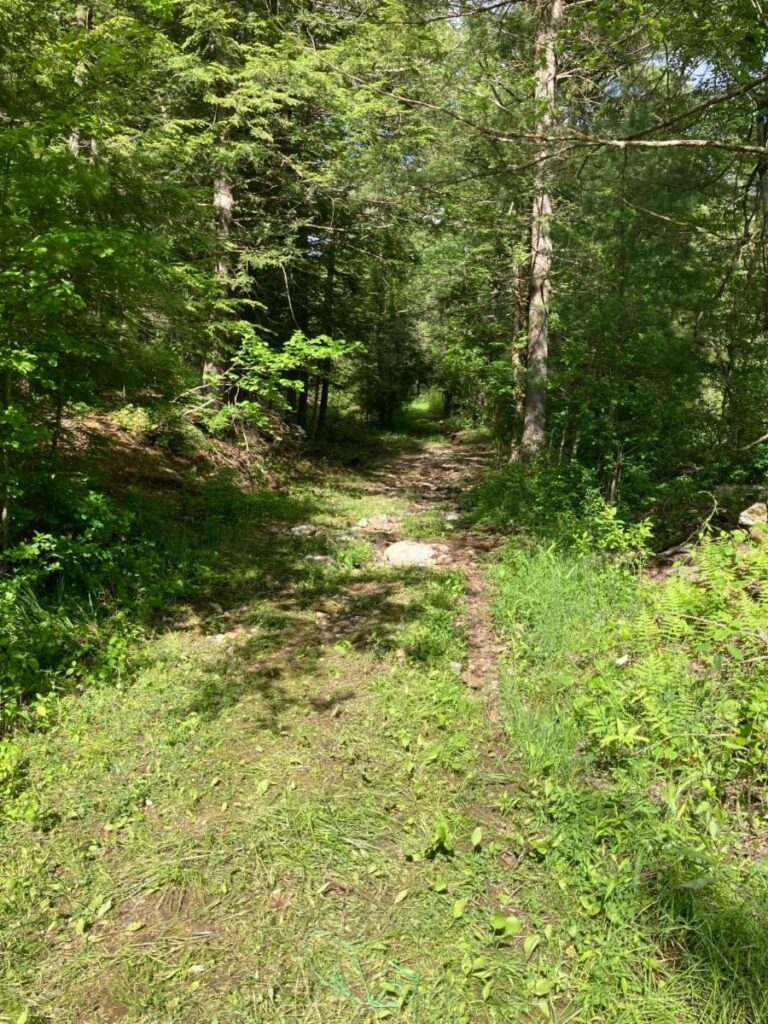
longer under water!